

Say “creatine” and most people picture a tub in a teenager’s gym bag, somewhere between the protein and the pre-workout. They assume it’s for bulking up, that it’s basically a legal steroid, that it’ll make them puffy and bloated — and that it’s the last thing a busy professional, or any woman, needs. Almost every part of that is wrong.
Here’s the uncomfortable truth: creatine is the single most-studied supplement on the planet — hundreds of trials, decades of safety data — and the evidence keeps pointing somewhere most people never look. Not just muscle: the brain, mood, healthy ageing, and women’s health. The enemy here isn’t creatine. It’s the locker-room mythology and the slick “advanced formula” marketing that have kept the most proven, most boring, cheapest supplement out of the hands of the people who’d benefit most.
First, what creatine actually is — the fact that reframes everything
Creatine isn’t a muscle product. It’s a cellular energy product. Your cells run on a molecule called ATP, and creatine is the system that recharges ATP fast, wherever demand suddenly spikes. Muscle is one place that happens. Your brain is the other: it’s about 2% of your bodyweight and burns roughly 20% of your energy. Anywhere that has to produce energy on demand — sprinting, lifting, thinking hard, running on no sleep — works better with a full creatine tank. That one fact is why the benefits reach so far past the gym.
What the science actually shows (beyond the muscle)
Your brain on a full tank
Creatine buffers mental energy the same way it buffers physical energy. Meta-analyses in older adults link it to better memory, attention and processing speed, and the effect is biggest exactly when the brain is under stress — sleep-deprived, ageing, jet-lagged, or eating little meat. It won’t turn you into a genius on a good day; it props you up on a bad one. For anyone who travels, works long hours, or sleeps badly, that’s the whole game.
Mood — the most underrated benefit
Some of the most consistent recent findings are about mood. Creatine appears to support the brain’s energy metabolism and, alongside standard care, has improved depression scores in trials — with women showing some of the clearest responses. It’s a support, not a treatment, and it’s not a substitute for proper care. But “cheap, safe, and may lift mood” is a rare combination worth knowing about.
Women — especially through perimenopause and menopause
Women generally carry lower natural creatine stores than men, and the research suggests they may have the most to gain. Studies point to benefits for reaction time and brain fog, for bone mineral density when paired with resistance training, and for mood — particularly through the perimenopause and menopause transition, when sleep, bone, muscle and focus all take a hit at once. This is the group the gym-bro stereotype has most wrongly excluded.
Healthy ageing — the longevity case
Longevity isn’t about living longer so much as staying strong, sharp and independent for longer. Combined with resistance training, creatine helps defend against age-related muscle loss (sarcopenia), supports bone and strength, and is being studied for fewer falls in older adults. The muscle you keep into your seventies is the muscle that keeps you out of a care home. That’s the real pitch.
And yes — strength and power (the part everyone already knows)
The original, rock-solid use is still true: a full creatine tank means a couple more reps, more power output, faster recovery between efforts, and a little more lean mass over time. It’s the most reliable legal performance aid there is. It’s just no longer the only reason to take it — or even the best one.
The myths that keep people away
“It’s a steroid.” No. Creatine is a compound your body already makes and you already eat in meat and fish. It touches no hormones.
“It’ll make me bloated or bulky.” The early 1–2 kg is water drawn into your muscle cells — fuller muscle, not a puffy gut — it isn’t fat, and it settles. Real “bulk” needs training and a calorie surplus.
“It wrecks your kidneys.” No evidence of harm in healthy people. The myth comes from creatinine, a harmless blood marker that naturally rises when you supplement. (Existing kidney disease? Ask your doctor first.)
“It causes hair loss.” Based on a single small 2009 study that was never replicated.
“It’s not for women.” Backwards — women may have the most to gain.
What to actually buy (ignore the fancy stuff)
This is where the marketing gets loud and the science goes quiet. The only form with thousands of studies behind it is plain creatine monohydrate. The “advanced” versions — HCl, kre-alkalyn, ethyl ester, gummies — cost several times more per dose and have never out-performed monohydrate in independent trials. The purity benchmark to look for on a label is German-made Creapure, but any reputable, third-party-tested micronised monohydrate is the same molecule. One label word that is worth having: “micronised” — it just means the monohydrate is milled into finer particles, so it dissolves cleanly instead of turning gritty and sits easier on the stomach. It’s the same creatine (it’s the version we reach for), so don’t confuse it with the gimmicky “forms” — micronised monohydrate is still plain monohydrate. Buy boring. Here’s where we’d start:
1. The practitioner-grade pick — Thorne Creatine
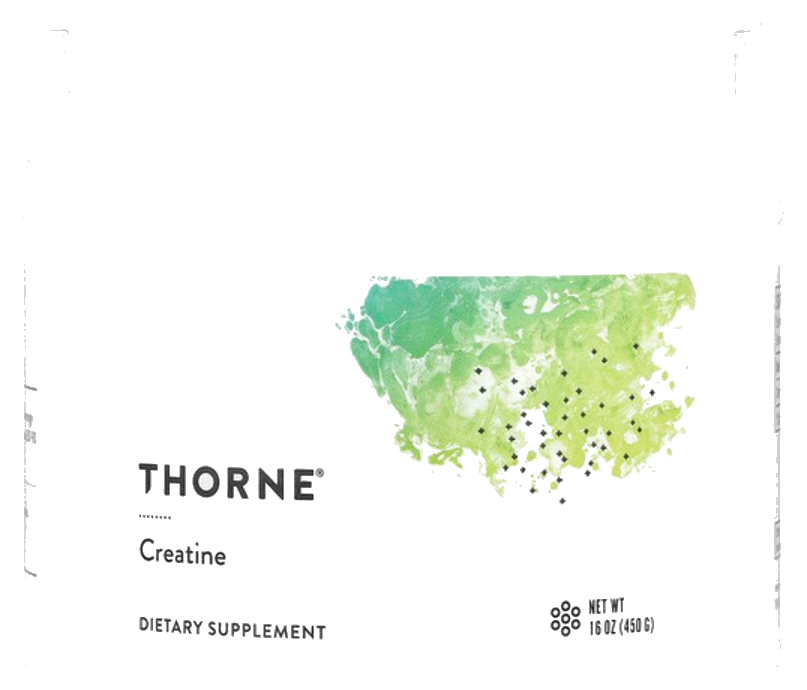
MOTIONE pick → Thorne Creatine, pure monohydrate, NSF Certified for Sport (the standard pro athletes trust), nothing else in the tub. The one to buy if you want zero doubt about what’s in it. Shop on iHerb →
2. The best-value everyday pick — California Gold Pure Creatine Monohydrate
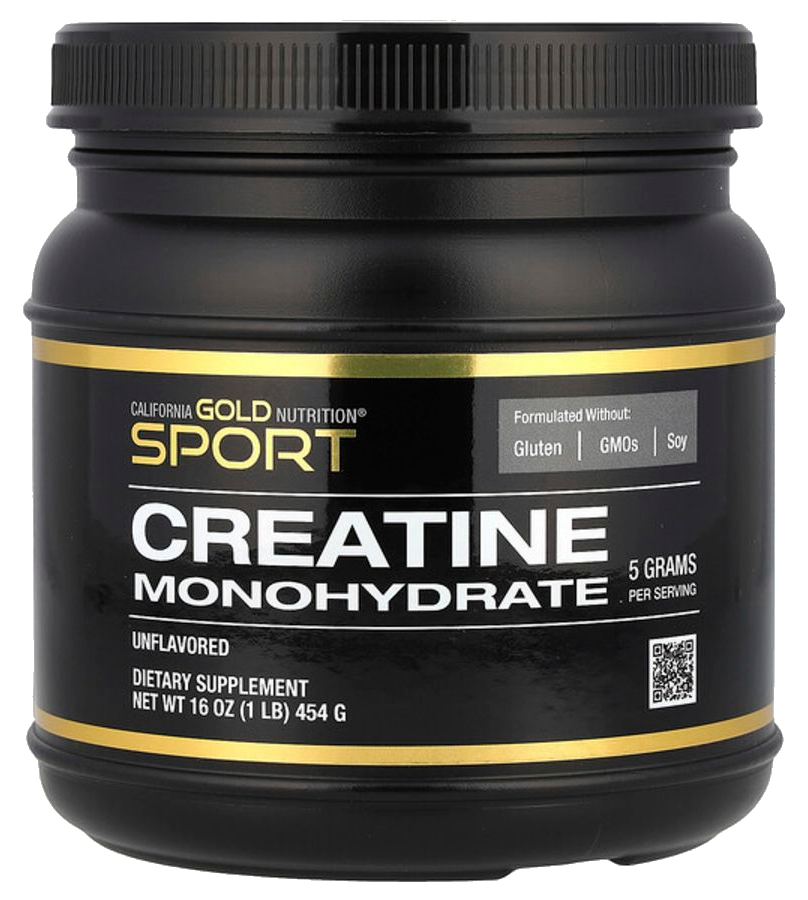
MOTIONE pick → California Gold Nutrition Pure Creatine Monohydrate, ~90 servings of pharma-grade, third-party-tested monohydrate for the price of a couple of coffees. The honest answer to “just tell me what to buy.” Shop on iHerb →
3. The no-powder pick — NutraBio Creatine Capsules
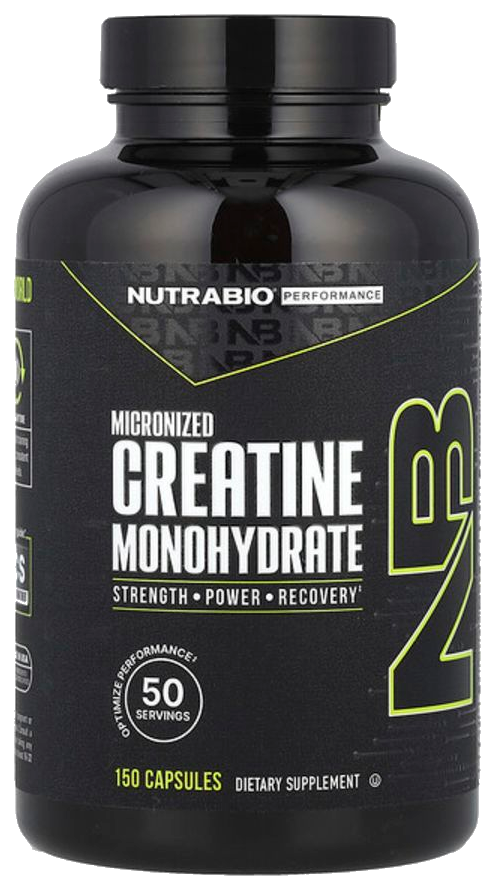
MOTIONE pick → NutraBio Micronized Creatine Capsules, same monohydrate, no shaker, no taste — for people who’ll never mix a powder. Just note it takes about six capsules to hit a 5 g dose. Shop on iHerb →
Skip the markup: creatine HCl, kre-alkalyn, “ethyl ester” and creatine gummies promise more and deliver the same creatine — for several times the price, and gummies often under-dose it. Monohydrate wins. Every time.
How to actually take it
It’s refreshingly simple. Take 3–5 g every single day, including rest days. Skip the “loading phase” — loading just saturates your muscles a week faster (with more stomach upset); a flat 5 g a day gets you to the same place in 3–4 weeks. Timing doesn’t matter — consistency does, so attach it to something you already do daily. Mix it into water, coffee or a shake; it’s nearly tasteless. And remember it’s not a stimulant — there’s no buzz. It works quietly over weeks as your tank fills.
A few honest caveats
Roughly 20–30% of people are “non-responders” who already carry high natural stores (often big meat-eaters) and notice less. It works on a timescale of weeks, not days — don’t expect a first-dose feeling. If you have kidney disease, or you’re pregnant or breastfeeding, clear it with a doctor first. Choose a third-party-tested product (NSF Certified for Sport or Informed) so you know the tub matches the label. And that early bump on the scale is water in your muscle, not fat.
Frequently asked questions
Is creatine safe for women?
Yes — at the standard 3–5 g a day it’s well-studied and safe for healthy women, and may specifically help mood, brain fog and bone density, especially from perimenopause onward. It won’t make you bulky.
Will creatine make me bulky or bloated?
No. Any early change is a small amount of water drawn into muscle cells, not fat and not a bloated belly. Visible “bulk” takes hard training and eating in a calorie surplus — creatine alone won’t do it.
Do I need to do a loading phase?
No. A flat 5 g a day fully saturates your muscles in about 3–4 weeks — loading only buys you speed, at the cost of more stomach upset.
Monohydrate or one of the fancy forms?
Monohydrate. The HCl, buffered and “ester” versions cost more and have never beaten plain monohydrate in independent research. Look for Creapure or any third-party-tested monohydrate.
Stay ahead. Get the Edge.
The new gear, science and vetted picks worth knowing — first. Be the one who’s always a step ahead, never the last to find out. Get the Edge — free →