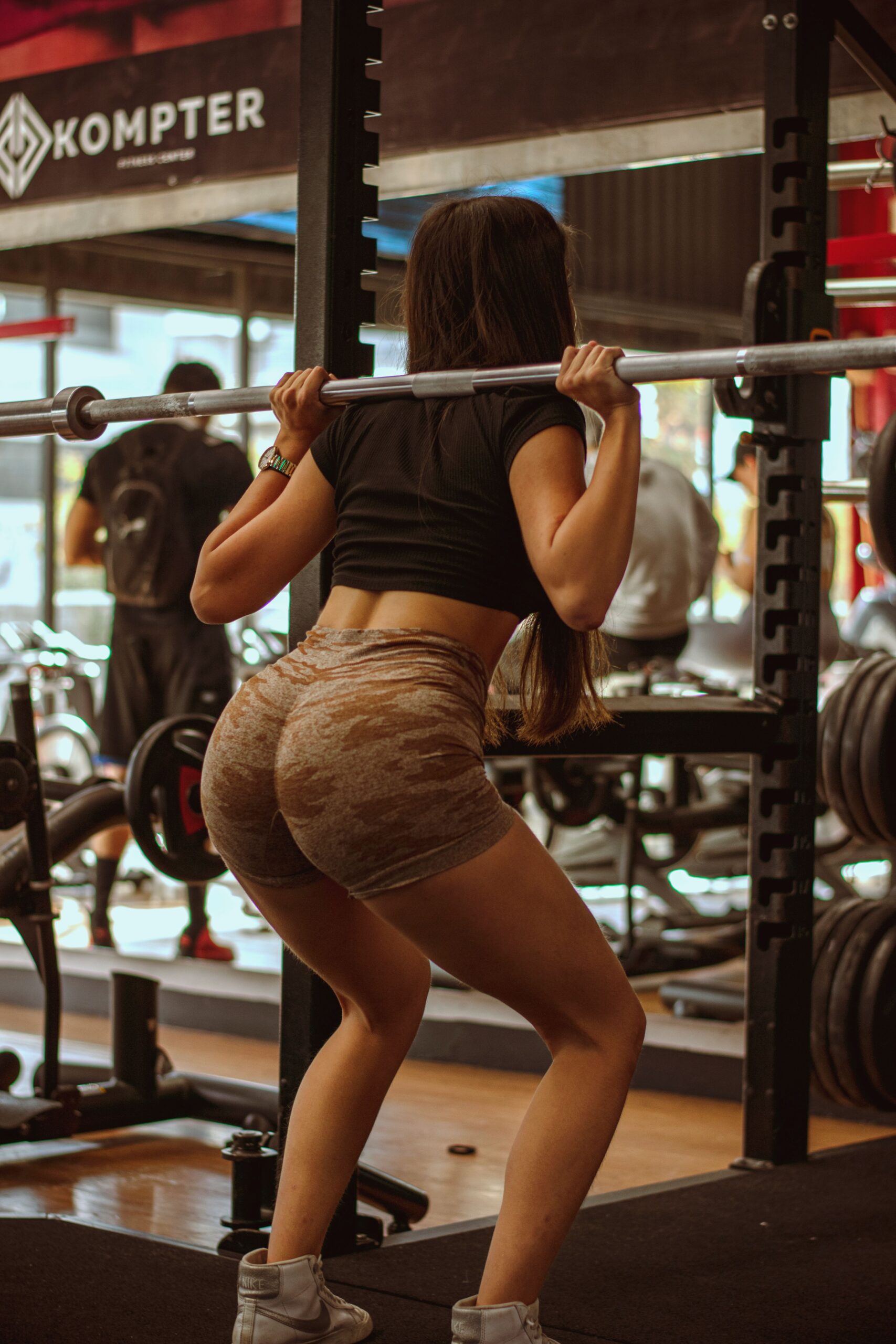
You’ve done the 10-minute booty burns. The endless banded kickbacks. The “grow your glutes at home, no equipment” routines that left you sore but, six months later, looking exactly the same. Here’s the part the algorithm won’t tell you: soreness isn’t growth, and a band isn’t progressive overload.
Your glutes are the largest, most powerful muscle in your body. They grow by exactly the same rule as every other muscle, progressive resistance over time. A little more load, a few more reps, week after week. The viral 15-minute burner can’t do that. It gives you the same band, the same bodyweight, the same everything, forever. Your glutes adapt in about three weeks and then quietly stop changing, while you keep showing up, working hard, and wondering why the mirror won’t move.
That’s the enemy here: the spot-burn, soreness-equals-results myth, built for engagement, not for your body. The man who actually proved how glutes grow, Dr. Bret Contreras (the “Glute Guy,” who researched this for a living), will tell you the same thing: heavy hip-driven work, structured progression, varied rep ranges. Not kickbacks until you cry.
So we went looking for the programs that apply real glute science, and that we can stand behind. Three cleared the bar.
One thing up front, because it matters: lifting heavy will not make you “bulky.” It builds shape and strength. “Toning” isn’t a real thing, you build the muscle and manage body fat, and that is the look everyone’s actually after. The healthy choice and the good-looking one are the same choice here.
The short version
- Serious about it, training in a gym, want real progression? → Ladder, structured, coach-led strength with proper lower-body programming.
- Want training and nutrition in one place, beginner-friendly, at home or gym? → Centr, the complete on-ramp.
- Want the biggest library and the best price? → BODi, a huge range of glute and lower-body programs (just ignore the upsells).
1. Ladder, coach-led, properly progressive

Best for: people training in a gym who want structured glute and lower-body strength that actually progresses.
Quick specs
- Team-based strength app built around named, elite coaches
- ~$29.99/mo
- Programs that load the big hip-dominant lifts (hip thrusts, squats, deadlifts, lunges) with real week-to-week progression
- Backed by serious funding and a strong reputation, a polished, premium experience
Why we rate it. This is the closest thing on the buy-list to “a real coach wrote my glute program.” It treats your lower body as something to train and progress, not just exhaust. You follow a coach’s plan, the loads climb, and your glutes get the one thing the viral burners never give them, progressive overload. If you’ve got access to a gym and some dumbbells or a barbell, this is the serious pick.
The honest catch. It leans gym-and-equipment, so it’s less ideal if you train at home with nothing. It’s a general strength app, not a glute-only specialist, but its lower-body programming is exactly what grows glutes.
MOTIONE pick → Ladder
Coach-led, properly progressive lower-body strength.
2. Centr, training + nutrition, beginner-friendly

Best for: beginners, home trainers, and anyone who wants the food side handled too.
Quick specs
- Chris Hemsworth’s platform, programmed by elite coaches
- ~$29.99/mo or ~$120–140/yr, 7-day free trial
- Lower-body / sculpt / strength programs for men and women, beginner → advanced
- Full nutrition built in: meal plans, recipes, shopping lists
Why we rate it. Glutes are built in the gym and the kitchen, you can’t grow muscle without enough protein and overall fuel, and you can’t see the shape without managing body fat. Centr is the only pick that handles both sides in one app, and it’ll take a total beginner by the hand. For “I want to start, I want it to tell me what to lift and what to eat,” it’s the easiest yes.
The honest catch. It’s a broad lifestyle platform, not a glute specialist. Advanced lifters chasing maximum glute growth will eventually want Ladder. As a first 6–12 months, though, it’s hard to beat.
MOTIONE pick → Centr
Training + nutrition in one, beginner-friendly.
3. BODi, the biggest library, the best value

Best for: variety-seekers who want lots of glute/lower-body programs without paying premium prices.
Quick specs
- The platform formerly known as Beachbody (now a straightforward subscription, no more MLM)
- Large library including dedicated glute and lower-body programs, at home or gym
- Among the cheapest per-month on this list
Why we rate it. If you get bored easily or want to rotate through different programs, nothing here matches the sheer volume, and the price is the friendliest. Several of its lower-body programs apply solid progressive structure. For trying lots of styles cheaply, it’s the value play.
The honest catch. Its heritage is mass-market fitness, so expect a louder, busier app with supplement and upsell prompts. Pick your program, follow it, and ignore the noise, the training underneath is more than good enough.
MOTIONE pick → BODi
The biggest library and the friendliest price.
Is this just for women?
Mostly it’s women searching for it, but glutes aren’t a women’s muscle. They’re your biggest engine for sprinting, jumping and lifting, they protect your lower back, and they’re one of the clearest markers of an athletic, healthy body at any age. Everything above works identically for men; the training principles don’t change. Strong glutes are performance, not vanity.
At a glance
| Ladder | Centr | BODi | |
|---|---|---|---|
| Best for | Serious gym training | Beginners + nutrition | Variety + value |
| Price | ~$29.99/mo | ~$10–12/mo (annual) | Lowest |
| Nutrition included? | ❌ | ✅ | Partial |
| Beginner-friendly? | ⚠️ some basics | ✅ | ✅ |
| Home-only friendly? | ⚠️ equipment helps | ✅ | ✅ |
FAQ
Is Booty by Bret (or Sweat) worth it?
Bret Contreras is the real glute-science authority, and his program is excellent if you want the purest specialist approach. Sweat is great if you want a big community. We just can’t formally support either, and for most people the picks above deliver the same progressive-overload principles with more structure and built-in nutrition. Any of them beats another month of band kickbacks.
Can I really grow my glutes at home with no weights?
A little, as a beginner, but you’ll plateau fast. Muscle needs progressive resistance. Get some adjustable dumbbells or a barbell, or pick a program that ramps difficulty intelligently. Bands alone won’t do it long-term.
How long until I see a difference?
Strength climbs in a few weeks. Visible shape takes a few honest months of progressive training, enough protein (~1.6–2.2g/kg of bodyweight), and recovery. Consistency beats intensity.
Do I need glute-specific exercises, or do squats cover it?
Squats help, but the research (Contreras’ work) shows hip-thrust-style, hip-extension movements hit the glutes hardest. The best programs include both, and all three picks do.
MOTIONE finds the tools that actually work, tested, no hype, for real life in Asia.
→ Get The Edge, free. One sharp email. The best of what works, where to get it.
Affiliate note: MOTIONE may earn a commission on some links, at no cost to you. We only ever link tools we’d genuinely use, and we never take payment to rank a product higher.